Made to Order
On-Demand Printing
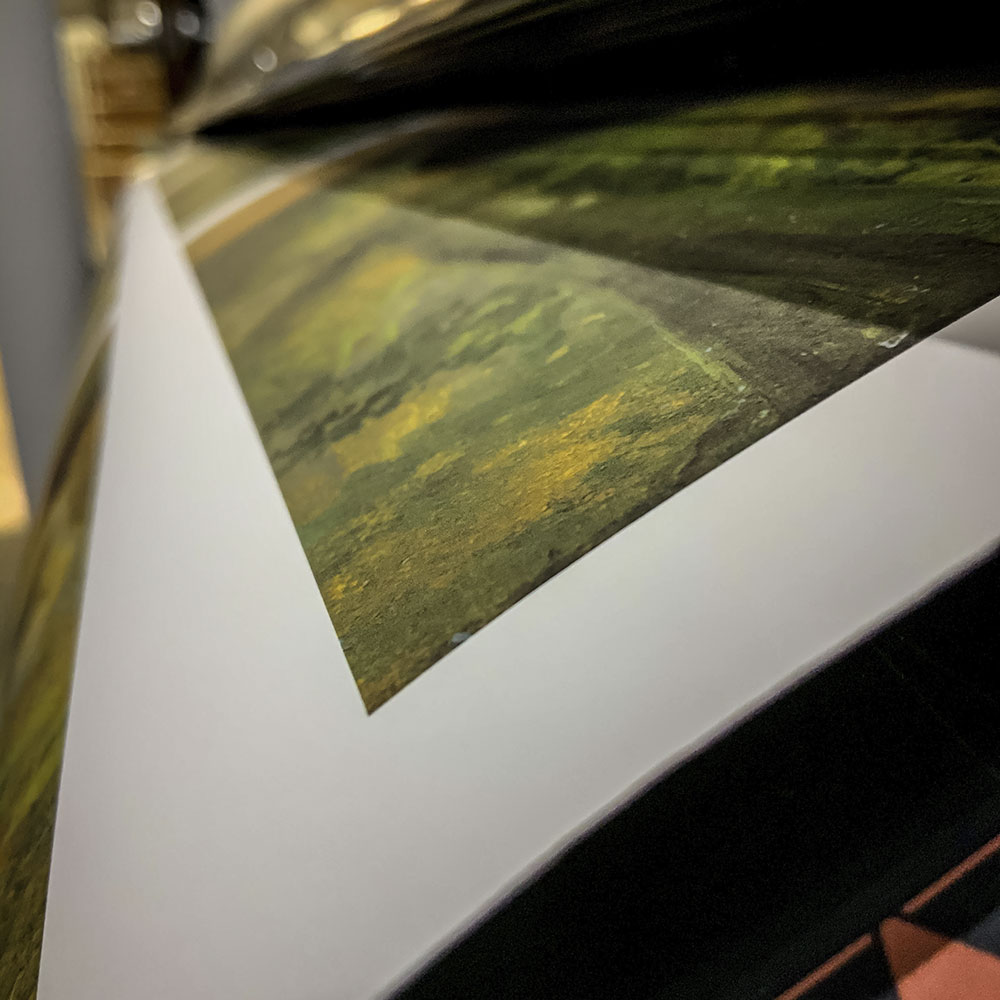
All products are produced on-demand, in accordance with stringent production protocols designed to ensure consistent and superior quality.

A pioneering member of the Die Brücke (“The Bridge”) Movement, which formed in Germany in 1905, Ernst Ludwig Kirchner’s paintings are characterized by chaotic brushwork, dynamic compositions and a jarring color palette, qualities shared with French Fauvist artists like Georges Braque. Kirchner eschewed classical ideals of beauty in an effort to “bridge” the gap between traditional painting and the tumultuous political atmosphere in the years leading up to the First World War. He painted Sawmill in Königstein in 1916, following his departure from military service. Having taken medical leave in 1915, Kirchner spent time recovering in this small, rural town, which he paints in clashing greens, violets and ochre tones. Representative of the psychological burden of war, the composition centers around the solitary figure surrounded by a pulsating landscape.